Best Cordless Vacuum for Stairs: What to Look For
Carpeted or hardwood stairs in a multi-story home? Weight, handheld mode, mini motorized tools, edge cleaning and safe habits, plus the cordless sticks that fit.
At a glance
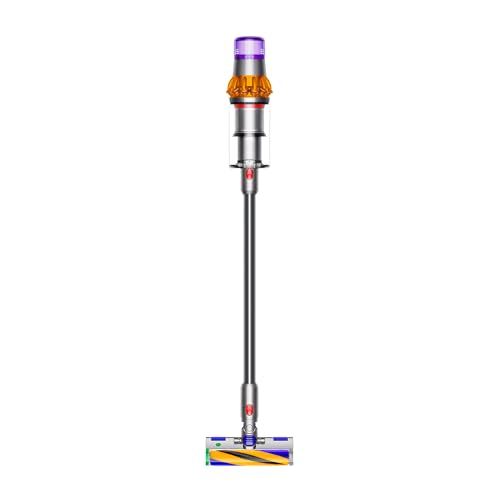
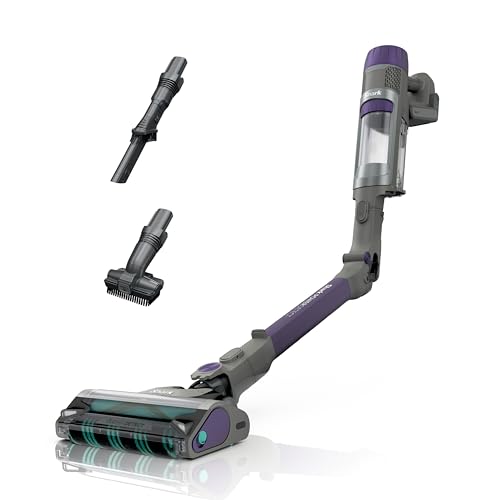
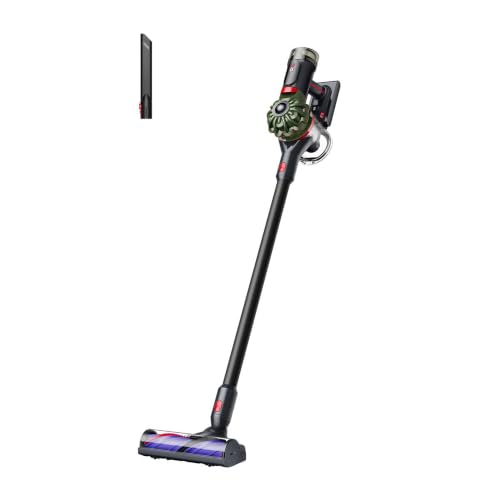
For stairs, weight matters most, so the Dyson V12 Detect Slim is our pick at about 5.2 lb. The Shark PowerDetect Cordless is a dockless option with a bendable wand and strong carpet results. The Dyson V8 Cyclone is the simple entry-level Dyson for smaller spaces and carpeted steps.
Stairs are where a vacuum earns or loses your affection. You are carrying the machine rather than pushing it, one hand is often on the railing, and the surface changes from carpet to a bare nosing to a painted riser within a few inches. In a multi-story home or a townhouse, that is a weekly chore, and a cordless stick with a handheld mode is the easiest way to do it. The weight in your hand, the tools in the box and how safely you can set the machine down matter more here than raw suction.
We did not handle any of these vacuums ourselves. We compared published specs and the findings of third-party outlets such as Vacuum Wars, TechRadar and Tom’s Guide, and we name the source for each figure. Below are the features that count on stairs, a safe way to work and the models in our lineup that fit.
What Matters on Stairs
Weight in Your Hand
On a flight of stairs, you hold the whole vacuum or its handheld part, so weight is the first spec to read. Published totals in our lineup are about 5.2 lb for the Dyson V12 Detect Slim (per Vacuum Wars), 5.84 lb for the Dyson V8 Cyclone (per Dyson), 6.4 lb for the Eureka ReactiSense 440 (per Eureka and Tom’s Guide), 6.6 lb for the Levoit LVAC-300, 6.8 lb for the Dyson V15 Detect, 7.5 lb for the Dyson V16 Piston Animal (per TechRadar) and 8.11 lb for the Shark PowerDetect Cordless IP1251 (per Shark).
Total weight is not the whole story, because where the weight sits changes how it feels. TechRadar said the V15’s battery makes it feel top-heavy and that holding it up in handheld mode for more than a minute or two was difficult. Vacuum Wars said the Bissell PowerClean DualBrush has a handle weight of about 4.18 lb and a high center of gravity that makes above-floor work feel awkward over longer sessions. If you have many steps, favor the lighter, better-balanced end of that list.
Handheld Conversion
On most sticks, the motor and bin detach to become a handheld vacuum, leaving the wand and floor head behind. Check how easily that happens and what you can attach. Tom’s Guide said the Eureka ReactiSense 440’s handheld setup with the brushroll attachment for stairs may have been its favorite configuration. Vacuum Wars said the Shark kit has no motorized hand tool and that this makes the vacuum less practical in handheld mode, so Shark’s motorized tool is an add-on.
Mini Motorized Tool vs. Crevice Tool
A plain crevice tool pulls dust from corners, but it does not agitate carpet pile. On carpeted treads, where pet hair and grit gather, a small motorized head does more. The Levoit LVAC-300’s box includes a mini motorized brush and a crevice tool. Vacuum Wars said the Bissell PowerClean DualBrush’s motorized upholstery tool is more substantial than many compact powered tools and should be useful on stairs. The Dyson V8 Cyclone ships in the US with only a crevice tool, according to Dyson’s spec sheet, so budget for extras.
Edges, Baseboards and Risers
Stair work is mostly edge work: the back of each tread, the joint with the wall and the baseboard that follows the staircase. Plan on the crevice tool for these. The Eureka ReactiSense 440’s brush sits close to the front of the casing, which Tom’s Guide said helps along baseboards, and Shark’s wand bends to reach where you point it. Wipe risers with a soft brush attachment instead of the bare crevice tool, and take your time near finished wood.
Battery and Runtime per Flight
Runtime per flight depends on the power mode and the tool, not on the number printed on the box. The up-to-60-minute figures are for the lowest power, and several makers measure them with a non-motorized tool. Levoit’s footnote says its 60 minutes was measured with the 2-in-1 crevice tool, and TechRadar recorded 14 minutes in Turbo with the floor head, which it said was plenty to cover the ground floor and staircase of a four-bedroom home. For stairs, use low or medium power and the handheld, and one charge should cover a normal staircase.
Working Safely on Stairs
These are common-sense habits, not manufacturer rules. Read your manual for details on your model.
- Put the vacuum down on a stable surface. Rest the machine on the landing or the floor, never balanced on a stair tread where it can slide down.
- Work from the top down. Start on the highest tread and move down, so dust falls toward the part you have not cleaned yet.
- Keep one hand free for the railing. This is the argument for a light machine and a handheld conversion.
- Mind the charger cable. If you charge on a wall dock, keep cables out of the walking path. A cordless stick is meant to free you from cords, so do not leave a trailing charger cable on the stairs.
- Use the maker’s battery and charger. The Consumer Product Safety Commission has warned about unbranded replacement battery packs for Dyson vacuums.
Models From Our Lineup That Suit Stairs
The Lightweight Pick: Dyson V12 Detect Slim
The lightest Dyson in our lineup at about 5.2 lb, with a more maneuverable handheld mode that suits stairs and car cleaning.
Vacuum Wars called the V12 far lighter than the V15 and said handheld use is more maneuverable. The V12 includes a combination tool, a crevice tool, a wand clip and the Hair Screw tool, though tool sets vary by package. The bin is small, about 12 to 13.5 oz (0.35 to 0.4 liters), so expect to empty it after a stair session. TechRadar saw about 40 minutes in Auto. Our Dyson V12 Detect Slim profile lists the specs.
The Bendable-Wand Pick: Shark PowerDetect Cordless (IP1251)
The dockless PowerDetect stick: a MultiFLEX wand that bends to reach under furniture, with strong carpet results, per Vacuum Wars.
This is model IP1251, which has no auto-empty dock (that is the IP3251). Shark lists 8.11 lb and a 0.7-quart dust cup, and Vacuum Wars reported a handle weight of about 4 lb (1,804 grams) and 100% on its carpet deep-clean measurement. By published weight, it is the heaviest stick in our lineup. The kit includes an 8-inch duster crevice tool and a pet multi-tool but no motorized hand tool, which is sold separately. It fits a house where carpeted stairs are one part of a bigger cleaning job. See the Shark PowerDetect Cordless profile.
The Entry-Level Pick: Dyson V8 Cyclone
A simple, entry-level Dyson for smaller spaces: 5.84 lb per Dyson, strong on medium-pile carpet per Vacuum Wars and TechRadar.
According to Dyson, the V8 Cyclone has 150 AW in Boost, up to 60 minutes of runtime in the lowest mode and a 2-year warranty. Vacuum Wars gave it a 100% carpet deep-clean score. The downsides for stairs are that the box holds only a crevice tool, the bin is about 17 oz (0.5 liters) and there is no Auto mode, so you pick the power yourself. TechRadar said Medium lasted about 28 minutes. Read the Dyson V8 Cyclone profile for the full picture.
A Light Alternative: Eureka ReactiSense 440
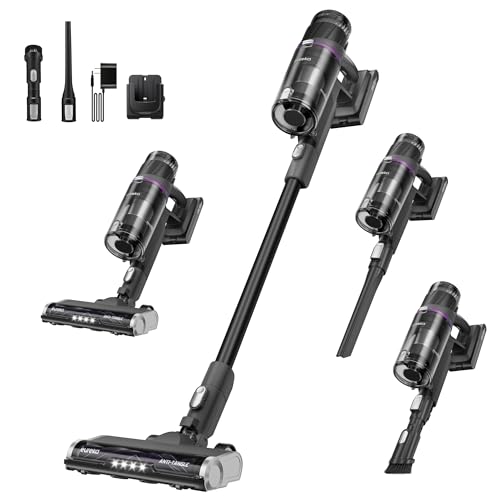
A light stick with a handheld setup that Tom's Guide found handy on stairs, plus a display that shows battery percentage.
Eureka lists a handheld portion of about 3.7 lb (1.7 kg) and a 2-year warranty, and the box includes a crevice tool, an upholstery brush and a wall mount. According to Tom’s Guide, it is not freestanding, so you hang it on the mount. Tom’s Guide found that runtime in auto mode was 30 minutes or less. Our Eureka ReactiSense 440 profile has more.
Which One for Which Staircase
- Carpeted stairs in an apartment or townhouse, light weight first: Dyson V12 Detect Slim.
- Carpet on the stairs and a house of mixed floors: Shark PowerDetect Cordless (IP1251).
- Smaller space and a tighter budget, but you want a Dyson: Dyson V8 Cyclone.
- Light stick with a good stair handheld setup: Eureka ReactiSense 440.
For hardwood stairs, a soft-roller head matters more, and the Levoit LVAC-300 profile describes a light self-standing option with a mini motorized brush. Our best cordless vacuums of 2026 comparison ranks all nine models.
Sources
- Vacuum Wars: Dyson V12 Detect Slim
- TechRadar: Dyson V12 Detect Slim
- Dyson V8 Cyclone technical specification (Dyson US/CA PDF)
- Vacuum Wars: Dyson V8 Cyclone
- Shark PowerDetect Cordless IP1251 official product page
- Vacuum Wars: Shark PowerDetect Clean and Empty and IP1251
- Vacuum Wars: Bissell PowerClean DualBrush 4196K
- Eureka ReactiSense 440 official product page
- Tom’s Guide: Eureka ReactiSense 440 Smart Cordless Vacuum
- Levoit LVAC-300 official product page
- TechRadar: Levoit LVAC-300 cordless vacuum
- TechRadar: Dyson V16 Piston Animal
- CPSC warning on replacement battery packs for Dyson vacuums (January 4, 2024)
Frequently asked questions
Is a cordless vacuum better than a corded one for stairs?
For most people, yes. With no cord, you do not have to unplug and re-plug on each landing or drag a cable up a flight. The trade-off is battery life, so check how long the model runs with the tool you will use on the steps.
How heavy should a stair vacuum be?
As light as your arms and budget allow, because you hold the machine up in handheld mode. Published weights in our lineup run from about 5.2 lb for the Dyson V12 Detect Slim to about 7.5 lb for the Dyson V16 Piston Animal. TechRadar said the Dyson V15 Detect's weight made handheld use for more than a minute or two difficult.
Do I need a mini motorized tool for carpeted stairs?
It helps. Carpeted steps hold pet hair and tracked-in dirt, and a small motorized head agitates the pile better than a plain crevice tool. Levoit includes a mini motorized brush in the box, per its product page, while the Dyson V8 Cyclone's US spec sheet lists only a crevice tool.
How do I clean the edges and the risers?
Use the crevice tool along the back of each tread and where the carpet meets the wall, and a soft brush on the risers and any wood nosing. A full-size head cannot reach into those corners.
Where should I put the vacuum down while I work on a step?
On a flat, stable surface such as the landing, where it cannot roll or tip. A stick vacuum left on a stair tread can slide down. Self-standing models help on level floors, but they are no substitute for setting the machine down on the landing.
Does one charge cover a whole staircase?
Usually, yes. TechRadar said 14 minutes of Turbo on the Levoit LVAC-300 was plenty to cover the ground floor and staircase of a four-bedroom home. Handheld use on low power should last much longer than floor-head use on high power.